
Proper care for and maintenance of dining tables is one of the most important investments you can make in your home, and the numbers prove it: the average person unintentionally damages their furniture once every 48 days, with stains accounting for 45% of all reported incidents. Whether you own a sculptural marble centrepiece, a travertine slab, or a cementitious-topped design, a consistent care routine is what separates a table that lasts a lifetime from one that fades within years.
Key Takeaways
|
Question |
Answer |
|---|---|
|
How often should you clean a dining table? |
Daily wiping after each meal is recommended. A deeper clean should happen weekly. |
|
What is the best cleaner for marble dining tables? |
A pH-neutral, non-abrasive cleaner diluted with warm water. Never use vinegar, citrus, or bleach. |
|
How do you protect a dining table from heat damage? |
Always use heat-resistant trivets or mats. Never place hot cookware directly on any stone or wood surface. |
|
How often should you seal a marble dining table? |
Seal on installation and reseal every 6 to 12 months depending on usage frequency. |
|
Can you use placemats on a marble table? |
Yes. Placemats, coasters, and table runners are among the most effective protective layers for any dining table surface. |
|
What materials are easiest to maintain? |
Sealed marble and travertine, when properly cared for, are highly durable. Browse our full dining table collection to compare finishes. |
|
What should you avoid placing on a dining table? |
Avoid acidic foods, abrasive cleaning pads, hot dishes placed directly on the surface, and sharp objects dragged across the top. |
1. Understanding Your Dining Table Material Before Starting Any Care Routine
The foundation of good care for and maintenance of dining tables is knowing exactly what material you are working with. Marble, travertine, cementitious tops, and wood each respond differently to cleaning agents, humidity, and daily wear.
Natural stone surfaces such as marble and travertine are porous, which means they absorb liquids more readily than engineered materials. This porosity is what makes sealing so critical, and it is also why the cleaning products you choose matter enormously.
Cementitious-top tables, such as the Forta Cementitious Top Dining Table, carry their own distinct care profile. They are less porous than marble but still benefit from a protective sealant and should never be exposed to harsh chemical cleaners.
Before you apply any product to your table, always confirm the surface material with the manufacturer. Our Marble Handling and Care Guide provides precise, material-specific instructions for all our natural stone pieces.
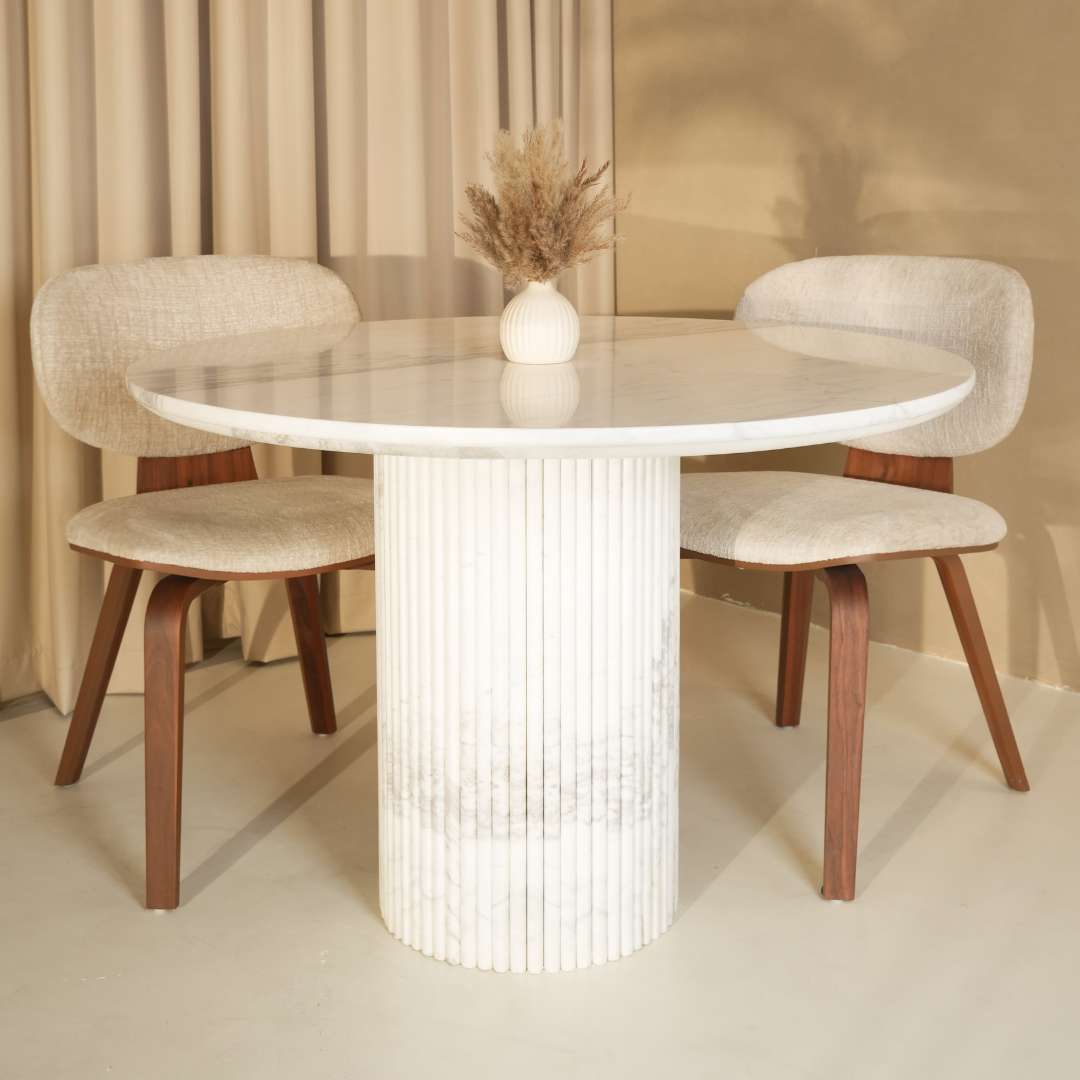
2. Daily Care for and Maintenance of Dining Tables: Building the Right Habit
Daily care for and maintenance of dining tables does not need to be time-consuming. A consistent, simple routine is far more effective than occasional intensive cleaning sessions.
After every meal, wipe the surface down using a soft, damp cloth. Microfibre cloths are ideal because they lift residue without scratching delicate stone or wooden surfaces.
For day-to-day dining, we recommend the following simple protocol:
-
Use a clean, damp microfibre cloth after each use.
-
Dry the surface immediately rather than allowing moisture to sit.
-
Place coasters under all glasses and drinkware.
-
Use placemats under plates and serving bowls.
-
Avoid dragging decorative objects across the surface.
These small habits dramatically reduce the accumulation of grime and the likelihood of surface etching, particularly on natural stone tables.
3. How to Clean Marble Dining Tables Properly?
Marble is one of the most prized dining table materials in 2026, and for good reason. Its natural veining and smooth, cool surface make it both visually striking and tactile. However, it requires a more considered cleaning approach than many other materials.
The key rule for marble care is to always use a pH-neutral cleaner. Acidic substances, including lemon juice, vinegar, and many household multi-surface sprays, will etch the surface and dull the finish permanently. This difference in sensitivity becomes clearer when materials are viewed in a broader context of form and function, as explored in our dining tables types and styles guide.
Follow these steps for a thorough marble table clean:
-
Mix a small amount of pH-neutral dish soap with warm water.
-
Dampen a soft cloth with the solution and wring it out thoroughly.
-
Wipe the surface in gentle, circular motions.
-
Rinse the cloth with clean water and wipe away any soap residue.
-
Dry the surface immediately with a clean, dry cloth.
For our marble dining table range, this approach preserves the natural veining and keeps the surface looking as refined as the day it arrived.
Did You Know?
Professional refinishing for a large dining table can cost between $1,200 and $2,300, while DIY scratch repairs average just $10 to $50.
Source: furnituretoday.com
4. Protection from Stains and Heat: Essential Dining Table Maintenance Tips
Protection from stains and heat is one of the most critical chapters in any guide to care for and maintenance of dining tables. Natural stone is particularly vulnerable to both thermal shock and acidic staining.
Always use heat-resistant trivets or cork mats beneath any hot item, including serving dishes, casseroles, and teapots. Even if a marble table appears unaffected immediately after contact, repeated heat exposure can cause hairline fractures beneath the surface over time.
For stain prevention, consider the following protective measures:
-
Use fabric table runners for casual dining settings. These add visual texture and protect against general surface contact.
-
Keep a coaster station on the table during gatherings so guests always have access to protection.
-
Avoid dark liquids such as red wine, coffee, and soy sauce sitting on an unsealed surface for any length of time.
-
Use a silicone mat beneath centrepiece arrangements, particularly those with metal bases that can scratch.
Dining tables used frequently for entertaining, particularly larger configurations, are naturally at higher risk. If you are shopping for a table designed to handle regular gatherings, our 8-seater dining tables are crafted with both beauty and durability in mind.
5. Spill Management: How to Act Fast to Protect Your Table Surface
How you respond to a spill in the first 30 seconds determines whether it becomes a permanent stain or a minor inconvenience. Speed and the right technique are everything.
Research shows that 15% of all household furniture damage occurs specifically in the dining room, with spills being the leading cause at 54%. Knowing how to respond correctly is one of the most practical dining table maintenance skills you can develop.
Follow these steps immediately after a spill:
-
Blot, never wipe. Wiping spreads the liquid across more surface area. Use a clean absorbent cloth and press gently.
-
Remove solid residue first. If food has spilled, carefully lift it away before addressing the liquid.
-
Apply a mild cleaner. Use your pH-neutral solution and blot the area again.
-
Rinse and dry. Remove all cleaning product residue and dry thoroughly.
-
Check for etching. On marble, acidic spills may leave a dull mark. If this occurs, a marble polishing powder applied carefully can restore the sheen.
Tables used for family dining and frequent entertaining, such as our 6-seater dining table options, benefit enormously from a sealed surface that gives you more reaction time when spills occur.

A quick visual guide to maintaining your dining table. Learn five essential care tips for longevity and appearance.
6. Sealing and Resealing: A Critical Step in Marble Dining Table Care and Maintenance
Sealing is the single most protective step in the care for and maintenance of marble and travertine dining tables. A proper sealant creates an invisible barrier on the surface that slows liquid absorption and significantly reduces the risk of staining.
Every marble dining table should be sealed upon installation. From that point, resealing should be scheduled every 6 to 12 months, depending on how frequently the table is used and how aggressively it is cleaned.
Here is a straightforward sealing process you can follow at home:
-
Clean the surface thoroughly and allow it to dry completely (at least 24 hours after a deep clean).
-
Apply a stone-specific impregnating sealant using a clean, lint-free cloth.
-
Allow the sealant to penetrate for the time specified by the manufacturer (typically 10 to 20 minutes).
-
Buff away any excess sealant before it dries on the surface.
-
Allow the table to cure for at least 24 hours before placing anything on it.
To test whether your table needs resealing, place a few drops of water on the surface. If the water beads up, the seal is still effective. If it absorbs within a few minutes, it is time to reseal.
Our Liva Travertine Marble with Wooden Base Dining Table is an excellent example of a piece that rewards this kind of attentive long-term care, maintaining its warm, textured beauty for decades when properly maintained.
7. Avoid Abrasives: Protecting Your Dining Table Surface from Everyday Damage
One of the most commonly overlooked aspects of dining table maintenance is the damage caused by abrasive cleaning tools and products. Wire scourers, rough sponges, and granular cleaning powders can leave fine scratches across a polished stone surface that accumulate over time and dull the finish.
The following items should never come into contact with a marble, travertine, or polished stone dining table:
-
Steel wool or wire scrubbers
-
Abrasive bathroom or kitchen powders
-
Bleach-based multi-surface sprays
-
Ammonia-based glass cleaners
-
Acidic cleaners (vinegar, citrus-based products)
-
Rough paper towels used with force
Always use soft microfibre cloths, gentle sponges, and products specifically formulated for natural stone care. When in doubt, warm water alone is safer than an unsuitable product.
For dining rooms with high foot traffic or frequent entertaining, compact options like our 4-seater dining tables are crafted to be both refined and resilient, and they reward this careful approach to cleaning.
8. Long-Term Care for and Maintenance of Dining Tables: Protecting Your Investment Over Years
Long-term care for and maintenance of dining tables goes beyond daily wiping and sealing. It requires thinking about the environment in which your table lives, the habits of the people who use it, and the occasional restoration your table may need as the years pass.
Consider these long-term care principles:
-
Manage humidity and sunlight. Prolonged exposure to direct sunlight can fade finishes and dry out natural stone. Use curtains or blinds to moderate UV exposure during peak daylight hours.
-
Check the base and legs regularly. Wobble is an early sign that joints or floor pads need attention. Addressing this early prevents uneven stress on the tabletop.
-
Lift, do not drag. When repositioning your table, always lift it. Dragging even a small distance can scratch both the floor and the base.
-
Inspect for micro-damage quarterly. Check for fine scratches, etching, and areas where the sealant has worn through, particularly near the centre where dishes are placed most frequently.
"With the right care, a genuine marble dining table will remain beautiful for generations. Every piece is unique, and that uniqueness deserves to be preserved."
Solid stone tables, when properly maintained, can far outlast mass-produced alternatives. The Sera Beige Marble and Wooden Base Dining Table is a perfect example of a piece designed for generational longevity. Visit the Sera Beige Marble and Wooden Base Dining Table to see how quality materials set the standard for long-term durability.
Did You Know?
37% of furniture damage occurs when the item is less than a year old, and 61% occurs within the first two years of ownership.
Source: wizardofhomes.com
9. Seasonal Deep Cleaning and Inspection for Dining Tables
Beyond your weekly routine, a thorough seasonal deep clean helps identify and address issues before they become serious. In 2026, more homeowners are integrating quarterly furniture care into their home maintenance calendars, and for good reason.
Here is a comprehensive seasonal maintenance checklist for your dining table:
|
Task |
Frequency |
Notes |
|---|---|---|
|
Surface deep clean |
Monthly |
pH-neutral cleaner, soft cloth |
|
Water bead test (seal check) |
Every 3 months |
Reseal if water absorbs rather than beads |
|
Base and leg inspection |
Every 3 months |
Check for wobble, loose joints, floor pad wear |
|
Full resealing |
Every 6 to 12 months |
More frequent for heavy-use tables |
|
Surface scratch assessment |
Every 6 months |
Address minor etching with marble polish before it worsens |
|
Full professional inspection |
Every 2 to 3 years |
Recommended for heirloom or high-value pieces |
The area around and beneath the table is also worth your attention during seasonal cleans. Dust and debris that accumulates under table legs can cause scratching when the table shifts, and in humid climates, it can contribute to moisture damage at the base.
10. Choosing the Right Dining Table for Low-Maintenance Living
The best maintenance strategy begins before you even make a purchase. Choosing a dining table designed with durable, well-sealed natural materials means that care for and maintenance of your dining table becomes a manageable pleasure rather than a demanding task.
When evaluating a new dining table purchase in 2026, consider these material and design factors from a maintenance perspective:
-
Honed vs. polished marble. Honed finishes are slightly more forgiving of daily wear and show fingerprints less readily than high-gloss polished surfaces.
-
Travertine has a characterful, slightly textured surface that conceals minor marks well and brings natural warmth to any dining room. Explore our travertine dining table collection for inspiration.
-
Cementitious tops offer a more urban, matte aesthetic and are slightly less sensitive to acidic exposure than marble, making them a practical choice for busy households.
-
Table size and shape. Round and oval tables tend to have fewer corners where damage occurs. Browse our round dining tables and oval dining tables if you prefer a more flowing silhouette.
For those with a smaller dining space, our 2-seater dining tables offer all the material quality of our larger pieces in a compact format that is correspondingly easier to maintain.
The Athia Marble Dining Table and the Fiora Marble Dining Table are both refined examples of pieces where quality craftsmanship and considered material selection make day-to-day care straightforward and rewarding.

The Cela Beige Marble Dining Table (from AED 2,100), available in 2 to 6-seater configurations, is a refined choice for those seeking both beauty and durability.
Conclusion: Care for and Maintenance of Dining Tables Is a Long-Term Commitment Worth Making
Consistent, informed care for and maintenance of dining tables is what protects your investment, preserves the beauty of natural stone, and ensures that your dining space continues to be a place of genuine sophistication for years to come.
The essentials are straightforward: clean daily with the right products, respond to spills immediately, seal your marble or travertine on schedule, protect surfaces from heat and abrasion, and schedule seasonal deep inspections. These habits, built into your routine, make a measurable difference over the lifetime of any quality dining table.
If you are considering a new piece or would like to explore the full range of our dining tables, visit our marble dining table collection or browse by size to find the right fit for your home. Every piece we craft is made from genuine natural stone, designed to reward exactly the kind of careful attention this guide describes.
For complete, material-specific care instructions tailored to your table, our Marble Handling and Care Guide is available whenever you need it. Proper care for and maintenance of dining tables is not a chore. It is the quiet practice that keeps an exceptional piece looking exceptional.