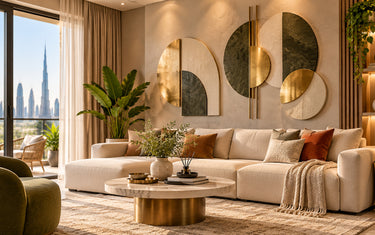
A beautifully furnished living room can still feel incomplete when its walls are left bare. The right wall decor adds personality, warmth, and visual balance, transforming an ordinary space into a welcoming place to relax and entertain guests.
Whether you live in a modern Dubai apartment or a spacious villa in Abu Dhabi, thoughtful wall decorations can refresh your interiors without replacing existing furniture.
From statement artwork and decorative mirrors to textured sculptures, there are many ways to enhance your space. Here are 10 practical living room wall decor ideas for UAE homes, along with expert styling tips to help you choose pieces that complement your furniture, room size, and personal taste.
Why Does Living Room Wall Decor Matter?
Your living room is where family members gather, guests are welcomed, and everyday moments unfold. While sofas, coffee tables, and lighting establish the room's functionality, wall decor gives it character.
Thoughtfully selected decorations can:
-
Create a focal point: A striking artwork or sculptural piece draws attention and gives the room a clear visual center.
-
Improve visual balance: Wall decorations connect furniture, colors, and architectural features for a cohesive appearance.
-
Reflect your personality: Artwork, mirrors, and decorative objects communicate your individual style.
-
Enhance the atmosphere: Colors, textures, and reflective surfaces influence how warm, spacious, or inviting a room feels.
In UAE homes, where interiors often combine contemporary design with elegant finishes, wall decor can bring these elements together without overwhelming the space.
10 Living Room Wall Decor Ideas for UAE Homes
The best wall decoration ideas balance visual appeal with the room's proportions, furniture arrangement, and natural lighting.
1. Create a Statement Wall With Oversized Artwork
A large artwork can instantly transform an empty living room wall into an attractive focal point.
Consider placing oversized abstract art above your sofa or opposite the main seating area. Choose colors that complement your upholstery, curtains, or cushions rather than matching everything exactly.
For contemporary UAE interiors, neutral backgrounds with gold, black, or earthy accents can create an elegant appearance.
Explore contemporary wall art from Art Dei Marmi for decorative pieces that can complement modern living room interiors.
Styling tip: Select artwork that occupies approximately two-thirds to three-quarters of the sofa's width for balanced proportions.
2. Use Decorative Wall Mirrors to Brighten Your Space
Mirrors are especially useful when decorating compact living rooms or spaces that receive limited natural light.
A carefully positioned mirror reflects light and creates an impression of greater depth. Round mirrors soften angular furniture, while rectangular designs work well above consoles and sideboards.
For Dubai apartments, consider placing a mirror opposite or adjacent to a window where it can reflect natural light without creating uncomfortable glare.
Browse Art Dei Marmi's decorative wall mirrors to explore options for different interior styles.
Styling tip: Check what the mirror reflects before installation. A reflection of artwork or an attractive window view usually looks better than clutter.
3. Add Texture With Wooden Wall Sculptures
Not every living room needs framed paintings. Wooden wall sculptures introduce texture, dimension, and an organic element that flat artwork may not provide.
They work particularly well in interiors featuring beige upholstery, stone surfaces, natural fabrics, and warm lighting.
A sculptural arrangement above a console table can create interest without relying on bright colors.
For a contemporary UAE villa, consider combining textured wooden decor with understated furniture and a restrained color palette.
Styling tip: Give sculptural pieces enough surrounding space so their shapes and shadows remain visible.
4. Introduce Contemporary Glass Wall Art
Glass wall art offers an alternative to traditional canvas paintings, particularly for homeowners who prefer polished, contemporary interiors.
Its reflective qualities can add visual interest, while abstract compositions introduce color without requiring major changes to the room.
Consider glass artwork for a feature wall behind a seating arrangement or above a low cabinet.
In living rooms with marble flooring, metallic accents, or streamlined furniture, glass art can complement existing finishes.
Styling tip: Avoid positioning highly reflective artwork directly opposite strong sunlight or harsh spotlights, as glare may interfere with the design.
5. Create a Balanced Gallery Wall
A gallery wall lets you display several smaller pieces instead of investing in one oversized decoration.
Combine artwork of different sizes while maintaining consistency through frame colors, spacing, or a shared theme.
For example, a collection of abstract prints in black frames can work beautifully in a neutral living room.
Before hanging anything, arrange the pieces on the floor to experiment with their placement.
Styling tip: Maintain consistent spacing between frames, generally around 5–8 cm, to make the arrangement feel intentional rather than crowded.
6. Try Minimalist Wall Decor for Modern Apartments
Minimalist wall decoration is ideal for smaller UAE apartments where excessive accessories can make interiors feel busy.
Instead of filling every wall, choose one or two carefully selected pieces.
A simple abstract artwork, slim-framed mirror, or understated sculpture can add personality while preserving a clean appearance.
Focus on quality, proportion, and negative space rather than the number of decorative items.
Styling tip: Keep surrounding accessories minimal so the wall decoration becomes a deliberate design feature rather than another competing element.
7. Choose Warm Neutral Tones for an Elegant Look
Warm neutral colors create a timeless foundation for modern living room wall decor.
Beige, cream, taupe, soft brown, and muted gold pair naturally with many furniture styles commonly found in contemporary UAE interiors.
Consider abstract artwork featuring earthy shades or sculptural decorations with natural textures.
These colors can soften rooms with polished floors, glass surfaces, and contemporary furniture.
For additional contrast, introduce small black or bronze accents through frames or nearby accessories.
Styling tip: Combine different textures within the same color family to prevent a neutral interior from looking flat.
8. Style the Wall Above Your Sofa
The wall above your sofa is often one of the most noticeable areas in the living room, making it an ideal place for decorative artwork.
You can choose one large horizontal piece, a coordinated pair of paintings, or a carefully arranged collection of smaller artworks.
Keep the composition centered over the sofa rather than the entire wall when the furniture is positioned asymmetrically.
Styling tip: As a starting point, leave approximately 15–25 cm between the sofa's backrest and the bottom of the artwork, adjusting for the furniture's height and the room's proportions.
9. Add Depth With Layered Wall Decor
Layering combines different decorative elements to make a living room feel more thoughtfully designed.
For example, place a wall mirror above a console table and complement it with a ceramic vase, small sculpture, or table lamp.
You can also combine wall art with subtle accent lighting to highlight textures and details.
The key is maintaining a clear visual hierarchy, where one element attracts attention and others provide support.
Styling tip: Vary the heights and shapes of nearby accessories rather than arranging everything symmetrically.
10. Make a Feature Wall the Room's Focal Point
A feature wall creates a dedicated area of visual interest without decorating every surface.
Choose a wall visible from the main entrance or seating area, then build your design around a statement artwork, sculptural arrangement, or decorative mirror.
Subtle paint colors, textured finishes, or wooden panels can provide an attractive backdrop.
For spacious UAE villas, a feature wall can help define a seating area within a larger open-plan living space.
Styling tip: Let the feature wall lead the design while keeping surrounding walls relatively simple.
How to Choose the Right Wall Decor for Your Living Room
With so many options available, selecting suitable decorations requires more than choosing an attractive design.
Consider Wall Size and Proportion
Measure the available wall space before purchasing artwork or mirrors.
Large walls generally accommodate substantial pieces or coordinated arrangements, while narrow spaces may benefit from vertical artwork.
Avoid choosing decorations that appear disproportionately small above large sofas or cabinets.
Coordinate With Existing Furniture
Your wall decorations should complement the furniture already in the room.
For example, contemporary sofas with clean lines often pair well with abstract artwork, while furniture featuring natural wood finishes can work beautifully with textured sculptures.
Repeat one or two existing colors or materials to create a visual connection.
Evaluate Lighting and Materials
Natural and artificial lighting influence how wall decorations appear throughout the day.
Reflective glass and mirrors require careful placement, while textured sculptures benefit from gentle directional lighting.
For UAE homes, consider whether direct sunlight reaches the wall and choose materials and finishes suitable for those conditions.
Wall Decor Tips for UAE Apartments vs. Villas
The available space should influence your decorating approach.
For apartments: Prioritize lightweight visual compositions, appropriately sized mirrors, and minimalist artwork. Avoid overcrowding smaller walls, and consider removable hanging solutions where rental agreements restrict drilling.
For villas: Larger rooms and higher ceilings may accommodate oversized paintings, sculptural arrangements, and more substantial feature walls. Consider viewing distance when choosing decorative pieces for expansive seating areas.
Regardless of property size, maintain a consistent relationship between wall decorations, furniture, and architectural features.
Common Living Room Wall Decorating Mistakes to Avoid
Even attractive decorations can look misplaced when proportions or positioning are overlooked.
-
Hanging artwork too high: Position pieces at a comfortable viewing height, accounting for nearby furniture.
-
Using too many decorative styles: Choose a consistent visual direction instead of mixing unrelated designs.
-
Ignoring wall proportions: Match artwork dimensions to the available space and furniture below.
-
Overcrowding walls: Allow sufficient negative space around statement pieces.
-
Forgetting lighting: Check reflections, shadows, and visibility during both daytime and evening hours.
A thoughtful arrangement usually creates more impact than adding numerous decorations without a clear plan.
Find Wall Decor That Complements Your Living Room
Refreshing your living room doesn't always require new furniture or a complete renovation. A carefully chosen wall decoration can introduce color, texture, and character while working with your existing interior.
Whether you prefer sculptural accents, contemporary artwork, or elegant mirrors, focus on pieces that suit your room's proportions and overall style.
Explore Art Dei Marmi's modern wall decor collection for inspiration and decorative options to help create a more personalized living space.
Frequently Asked Questions
What is the best wall decor for a modern living room?
Abstract artwork, decorative mirrors, minimalist sculptures, and contemporary glass art are popular choices for modern interiors. The best option depends on your room size, furniture style, color palette, and available wall space.
How can I decorate a small living room wall?
Choose a single statement piece, a proportionate mirror, or a small coordinated artwork arrangement. Avoid overcrowding the wall, and use light colors or reflective surfaces where appropriate to maintain an open appearance.
Should living room wall art match the sofa?
Wall art doesn't need to match your sofa exactly. Instead, choose complementary colors, textures, or contrasting accents that connect with the furniture and overall room design. This creates a cohesive appearance without making the space feel overly coordinated.