
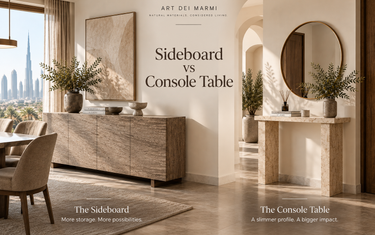
A sideboard and a console table may look similar at first, but they have quite different roles in a home. Sideboards are usually larger and more storage-focused options. A console table, in contrast, is slimmer. So it fits more easily in hallways, entryways, and other tight spaces.
In a UAE home, that difference can matter quite a bit. A spacious villa dining room has room for a sideboard and the extra storage it offers. In a narrow hallway or a compact Dubai apartment, a console table may simply make more sense.
This sideboard vs console table guide explains the key differences, including size, storage, placement, function, and materials, so you can decide which option works better for your space.
What Is a Sideboard?
A sideboard is a storage-focused piece of furniture. Usually, it combines a wide tabletop with cabinets, drawers, or internal shelving.
Sideboards are traditionally associated with dining rooms, where they can provide convenient storage for tableware, serving pieces, and other dining essentials. In modern UAE homes, however, they can also work in living rooms and other spacious areas where added concealed storage is useful.
Because a sideboard is generally wider and deeper than a console table, room proportions are important. A larger sideboard may sit comfortably against the wall of a villa dining room, but the same piece could take up too much floor space in a compact apartment.
The material matters just as much. A wood sideboard can soften a modern room, while stone and other natural finishes can give it more presence. The important thing is to consider how the finish will work with what is already there and how much visual weight the room can handle.
What Is a Console Table?
A console table is a slim piece of furniture designed to provide useful surface space without taking up too much room. Unlike a sideboard, it usually has little or no enclosed storage, although some designs may include drawers or a lower shelf.
Console tables have an easy place in the home. They work in entryways and hallways, sit neatly behind sofas, and can fill a living room wall without taking up too much floor space. Their shallow depth is useful in tighter areas, especially where you still need a clear path through the room.
In a UAE apartment, a console table can provide a useful surface for everyday items or decorative pieces without making a smaller space feel crowded. In a larger villa, it can be used against an empty wall or behind a sofa to add visual interest and help complete the room.
Materials such as marble, travertine, and natural wood can also turn a console table into a statement piece while keeping its practical purpose.
Sideboard vs Console Table: What Is the Difference?
The main difference between a sideboard and console table comes down to storage, size, and purpose. A sideboard is generally larger and provides more enclosed storage, while a console table is slimmer and mainly provides surface space.
|
Feature |
Sideboard |
Console Table |
|
Main purpose |
Storage and surface space |
Display and surface space |
|
Typical design |
Wider and deeper |
Slimmer and narrower |
|
Storage |
Cabinets, drawers or shelves |
Limited or no storage |
|
Best locations |
Dining room, living room |
Entryway, hallway, living room |
|
Space required |
More floor space |
Less floor space |
|
Suitable for |
Larger rooms and storage needs |
Narrow areas and lighter layouts |
A sideboard may be the better option when storage is the priority. It can keep dining essentials, household items, or other belongings organised while providing a useful surface above.
A console table makes more sense when you want to add a functional surface without introducing a large piece of furniture. Its slimmer profile can make it particularly useful in narrow areas and compact UAE homes.
Neither option is automatically better. The right choice depends on how much space you have, how much storage you need, and where you plan to place the furniture.
Where Does a Sideboard Work Best in a UAE Home?
A sideboard works best in a room that needs both storage and a generous surface area. Dining rooms are one of the most practical locations because a sideboard can keep tableware, serving pieces, and other dining essentials close to the table while keeping them out of sight.
In a living room, a sideboard can provide concealed storage for everyday items while also creating a surface for artwork, decorative objects, or other carefully selected accessories. This can be quite useful in larger UAE homes where the room needs furniture with enough visual presence to suit its proportions.
Before choosing a sideboard, measure the available wall and floor space. Leave enough room to open cabinets or drawers comfortably without restricting the main walking route.
Where Does a Console Table Work Best?
A console table is more flexible when you need a surface but are not really after any substantial storage. Its slimmer proportions let it fit in areas where a deeper sideboard may feel too heavy or take up unnecessary floor space.
An entryway or hallway is a natural location for a console table. It provides a convenient surface for everyday items while giving an otherwise empty area a more finished look.
In a living room, a console table can sit against a wall or behind a sofa. This makes it useful for displaying a few decorative objects while keeping the layout open.
A slim console can be a practical choice in a smaller Dubai apartment, where every bit of floor space matters. In a larger villa, the same piece can be more decorative, especially when you choose a material like marble, travertine, or natural wood that has enough presence to stand on its own.
The location should ultimately match the function. Choose a sideboard when storage matters and a console table when you mainly need a slimmer surface or a decorative focal point.
Should I Choose a Sideboard or Console Table for a Small UAE Apartment?
In a compact UAE apartment, available floor space should be your first consideration. Both pieces can be useful, but a console table will often be the more sensible choice when space is limited.
Its slim profile makes it easier to place in an entryway, hallway, or living room without limiting movement. That said, a console table can provide enough surface space for everyday items and decor. But they keep the room visually open.
However, a sideboard may be the better option if storage is your bigger concern. In such cases, instead of adding several smaller storage pieces around the room, one appropriately sized sideboard can provide concealed storage and help keep the space organised.
Base your decision on what the room lacks most. If you need more storage, consider a sideboard. If you need a useful surface while saving floor space, a console table may be a better fit.
Which Works Better in a Living Room?
Both can work in a living room, but as said earlier, they serve different purposes.
A console table is useful when you want to fill an empty wall, create a display area, or add a surface behind a sofa without introducing bulky furniture. A marble, travertine, or natural wood console can also become a visual feature in a modern living room.
A sideboard makes more sense when the living room needs additional built-in storage. Its cabinets and drawers can help keep everyday items organised while the top provides space for carefully selected decor.
For a smaller living room, consider how much depth the furniture adds before shopping. In larger villa living rooms, scale matters too. A piece that is too small may look disconnected from the surrounding furniture.
Which Works Better in a Dining Room?
A sideboard is usually the more functional choice for a dining room because of its storage capacity. It can provide a dedicated place for tableware, serving items, and other dining essentials while keeping them within easy reach.
A console can work just as well when you don’t need much storage. Its slimmer shape leaves more room to move around the dining area while still giving you a place to set a lamp, flowers, or a few everyday pieces.
In many UAE homes, the dining area sits alongside the living room, so the two naturally become part of the same setting. Materials can come in handy here. Wood, marble, or travertine can carry a similar tone from one area to the next, without making the furniture look overly matched.
Choosing the Right Material for a Sideboard or Console Table
Once you have decided which type of furniture suits your space, the next consideration is material. The right choice should work with your existing interior while also delivering the look and function you want.
Marble
Marble can give a sideboard or console table a strong visual presence because every slab has its own natural veining and pattern. It works particularly well in modern and luxury UAE interiors where the furniture is meant to be a focal point.
A marble console table can make an entryway or living room feel more refined without adding much furniture. When considering marble, also think about the finish, surrounding colours, and how you’ll use the piece day-to-day. Our marble care guide can help you understand what it takes to keep it looking its best.
Travertine
Travertine works so well with the warmer interiors common across the UAE. Its sandy, understated tones sit comfortably beside beige, cream, and earthy shades, while the natural surface adds just enough texture to keep the room from feeling flat. It can work just as well in a Dubai apartment as in a spacious Abu Dhabi villa.
A travertine console or sideboard adds texture without a bold colour or busy pattern, making it appropriate for calm, understated interiors.
Natural Wood
Natural wood brings warmth and visible grain to a room. It works particularly well when the surrounding interior already includes stone, neutral upholstery, or other hard surfaces.
Wood can also work with different design directions, from simple contemporary interiors to warmer, more natural living and dining spaces.
Rather than choosing a material only because it is currently popular, consider how its colour, texture, and visual weight will work with the furniture and finishes already in your home.
How to Choose Between a Sideboard and Console Table
If you are still deciding between a sideboard or console table, focus on four practical questions:
How much storage do you need?
Choose a sideboard when you need concealed storage. If you mainly need extra surface space, a console table may be enough.
How much floor space is available?
Before choosing anything, take a proper look at the space. Measure the width and depth and leave enough room to move around comfortably. If the area is tight, a console often fits more easily. Sideboards tend to need a little more breathing room.
Where will the furniture be placed?
Sideboards are especially useful in dining and living areas where you need storage. Console tables can work well in entryways, hallways, living rooms, and behind sofas.
What role should the piece play in the interior?
Decide whether you want the furniture primarily for storage, everyday function, or as a visual feature. The answer will help determine not only the type of furniture but also its size, material, and finish.
There is no single right choice for every UAE home. Think about the room, how you use it, and how much furniture it can comfortably hold. From there, the decision between a sideboard and a console becomes much easier.
The right piece is the one that works in your home, not just on the showroom floor
Common Mistakes to Avoid When Choosing a Sideboard or Console Table
Choosing between a sideboard and console table becomes easier when you consider the room, function, and dimensions before focusing on appearance. Here are some common mistakes to avoid.
Buying without measuring the space: Check the available width and depth before choosing a piece. Leave enough room for comfortable movement and, with a sideboard, space to open doors and drawers.
Ignoring access and delivery requirements: Measuring the space is only part of the process. Check doorways, corridors, lifts, stairways, and other access points before ordering, especially when furnishing an apartment.
Choosing style over function: A piece can look perfect but still not work for how you use the room. Think about what needs to be stored, what needs to be within reach, and how much furniture you actually need before making the final choice.
Ignoring furniture proportions: A deep sideboard can make a narrow area feel crowded. On the other hand, a console that is too small can look lost on a large wall, while a taller one may feel out of place behind a sofa. Look for proportions that feel natural within the room.
Overlooking existing materials: Before you choose the piece, look at the room as it already is. Marble floor, wood furniture, stone finishes- they all set a certain tone. A new sideboard or console needs to sit comfortably within that mix.
Adding too much decor: A console or sideboard does not need to be covered with accessories. If the furniture already features distinctive marble veining, travertine texture, or natural wood grain, keep the styling simple so the material itself becomes part of the design.
Overlooking outlets and cables: Think about what sits behind the furniture as well as what sits in front of it. Power outlets, TV connections, and visible cables can affect where you place a console or sideboard. This is another practical detail UAE homeowners often consider when planning media walls and living spaces.
There is a lot to consider before bringing a sideboard or console home, but it often comes down to one simple question: will this piece make sense in the room once you start living with it?
The right size, finish, and storage should feel natural, not like something you have to work around.
Sideboard or Console Table: Which Should You Choose?
The choice between a sideboard and console table depends mainly on your space, storage needs, and where you plan to place the furniture.
Choose a sideboard if you need enclosed storage and have enough room for a wider, deeper piece. It’s especially useful in dining rooms and larger living spaces where storage and surface space matter equally.
Choose a console table if you want a slimmer piece for an entryway, hallway, living room, or another area with limited floor space. It is also a good choice when your main goal is a useful surface or visual feature rather than extra storage.
Before you get too drawn into a sideboard or console’s look, measure the space. Check how much room people need to move around it and what you want the piece to hold. Those details will tell you far more than a photograph will.
Material can then help bring the piece into the wider interior. Marble can create a stronger statement, travertine can introduce warm natural texture, and natural wood can offer warmth and character.
If you are choosing furniture for a modern UAE home, explore Art Dei Marmi for natural materials and furniture designed to bring together practical function, considered proportions, and distinctive design.
FAQs
Is a sideboard the same as a console table?
No. A sideboard is generally wider and deeper, with cabinets, drawers, or shelving for storage. A console table is usually narrower and mainly provides surface space in areas such as entryways, hallways, and living rooms.
Can I use a sideboard in a living room?
Of course. It is a simple way to add storage without giving up a useful surface. Use it for the things you would rather keep tucked away, and style the top with artwork, books, or a few favourite pieces. Just check the dimensions before you bring one into the room.
Can a console table be used in a dining room?
Yes. A console table can be a functional choice for a smaller dining area where a full sideboard would take up too much floor space. It provides an additional surface, but usually offers less storage than a sideboard.
Which is better for a small apartment, a sideboard or console table?
A console table is usually easier to fit in a smaller apartment. Its shallower depth leaves more room around it. But that changes when storage is what you are missing. In that case, a smaller sideboard may be worth the extra space it takes up.
What should I put on a console table?
Keep the arrangement simple and proportionate to the table. A lamp, vase, decorative object, artwork, or a few carefully selected accessories can work well. If the console is made from marble, travertine, or natural wood, leaving some of the surface visible can also help highlight the material.
How do I choose the right size sideboard or console table?
Measure the available wall space and the depth you can comfortably use without affecting movement through the room. For a sideboard, also allow enough clearance to open cabinets and drawers. The furniture should feel proportionate to the wall and nearby pieces, not too large or too small for the space.