
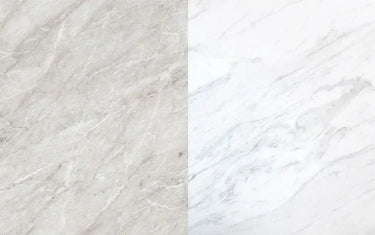
When comparing stone vs. marble furniture, it helps to clear up one thing first. Marble is a natural stone, just like travertine, granite, quartzite and onyx. What changes from one material to another is the look, the feel, how the surface handles everyday use, and how much care it needs.
That matters when you are choosing a dining table, coffee table or console. A heavily veined marble may give a room a very different character from warm, textured travertine, while granite or quartzite may suit a household looking for a harder surface. Understanding those differences makes it easier to choose a piece that works for both your interior and the way you use it.
If you are choosing a piece for your home, this comparison will help you look beyond the photograph. You will see how different natural stones compare in durability, maintenance, appearance and everyday use, so you can narrow down what actually suits your space and habits.
What Is the Difference Between Stone and Marble Furniture?
Natural stone furniture is furniture made with a stone surface or structure formed from naturally occurring rock. Marble is one of the materials that falls into this category. Others include travertine, granite, quartzite and onyx.
Marble furniture specifically uses marble, a metamorphic rock whose main mineral is typically calcite. Its characteristic veining, colour variation and ability to take different finishes make it a popular material for tabletops and other interior furniture.
The practical difference is easier to understand this way:
|
Material |
Visual character |
Main thing to consider |
|
Marble |
Distinctive natural veining and varied colour |
Acid sensitivity, staining and surface care |
|
Travertine |
Warm tones, pores and natural texture |
Porosity, finish and sealing requirements |
|
Granite |
Varied colours and patterns |
Hardness, weight and the specific stone |
|
Quartzite |
Natural patterns with generally high hardness |
Confirm the stone’s actual classification and care requirements |
|
Onyx |
Strong patterning and often translucent character |
Decorative use and careful handling |
Every natural stone offers something unique. And no single property makes one natural stone “better” than another. A material that works beautifully for a dining table may not be the one you choose for a small sculptural side table.
That is why the useful question is not simply: should you invest in stone or marble furniture? It is which stone makes sense for this piece of furniture, in this room, and for the way you actually use it.
Types of Natural Stone Used in Furniture
The word “stone” can make the choice sound simpler than it is. But different stones bring very different qualities to a room.
Marble Furniture
Marble is often chosen first for its appearance.
Its veining can be fine and quiet or dramatic enough to become the focal point of a room. Polished marble reflects light and gives a sharper, more formal finish. Honed marble has a softer, less reflective surface.
There is also considerable variation between individual slabs. That matters when you are buying a dining table or coffee table because the photograph of one piece cannot always predict exactly how another slab will look.
Marble also needs an informed approach to care. True marble is calcite-based and can react to acids. Lemon, vinegar and other acidic substances can etch the surface, leaving a dull mark rather than a conventional stain.
For someone who wants a natural surface with visible character and is comfortable treating it with some care, that may be part of the appeal rather than a reason to avoid it.
Travertine Furniture
Travertine has a different visual language.
Its warm ivory, beige and earthy tones tend to feel quieter. The pores and natural variation add texture, especially in honed or other matte finishes.
That makes travertine particularly interesting in interiors built around wood, linen, plaster, warm neutrals and other natural materials.
But those pores are not merely visual. Travertine is calcium-carbonate based like marble, and absorption varies considerably between varieties. It is also vulnerable to mild acids.
The finish therefore matters. A filled and finished travertine tabletop will behave differently from a more open, textured surface.
Granite and Quartzite Furniture
Granite and quartzite are worth considering when surface hardness is high on your list.
Granite is an igneous stone with a wide range of colours and mineral patterns. Quartzite is a metamorphic rock formed from sandstone and can have exceptional strength, density and hardness.
That does not mean every granite or quartzite piece behaves identically. Natural stone is not a single uniform material. Mineral composition, porosity, finish and fabrication all affect performance.
For furniture buyers, the useful question is therefore not simply whether granite or quartzite is “stronger.”
Ask the supplier what the actual stone is, what finish it has, how to clean it, and whether it has been treated.
Onyx Furniture
People often choose onyx for its appearance first. Many varieties have strong bands, layered patterns and a degree of translucency that becomes especially striking when light passes through the stone.
It also needs a little more care. Onyx can be vulnerable to chemicals and abrasive materials, so it is worth knowing how to clean and protect the surface before you buy it.
That makes onyx particularly interesting for pieces where the stone is meant to stand out, such as a console, side table or statement coffee table.
Stone vs Marble Furniture: Complete Material Comparison
Here is the comparison that matters when you are actually choosing furniture.
|
Material |
Appearance |
Hardness/wear |
Porosity |
Acid sensitivity |
Typical furniture use |
|
Marble |
Veined, polished or softly honed |
Varies by stone; susceptible to scratching |
Varies |
High for calcite-based marble |
Dining tables, coffee tables, consoles, side tables |
|
Travertine |
Warm, textured, naturally porous |
Generally softer than harder stones |
Can be significant |
High |
Dining tables, coffee tables, consoles |
|
Granite |
Mineral-rich, varied patterns |
Generally hard and abrasion-resistant |
Varies by variety |
Generally lower than calcareous stones, but stone-specific |
Tables and heavy-use surfaces |
|
Quartzite |
Natural veining and crystalline patterns |
Can be exceptionally hard |
Varies |
Generally more acid-resistant than calcite-based stones, but verify the stone |
Tables and high-use surfaces |
|
Onyx |
Strong patterning, often translucent |
More vulnerable to abrasion and chemicals |
Varies |
Material-specific |
Decorative tables, consoles and statement pieces |
This comparison table gives you the broad differences, but natural stone is rarely that simple. The same category can include stones with different compositions and characteristics.
That is why the actual stone matters when you are buying furniture. For example, a marble table with a polished surface will behave differently from one with a honed finish. The finish, treatment and intended use all affect how you should care for the piece.
The Natural Stone Institute recommends identifying the stone’s geological classification and composition before deciding how to clean or maintain it. In other words, “natural stone” isn't enough information on its own.
Which Is More Durable: Marble or Other Natural Stones?
“Durable” is too broad a word to answer this properly.
A stone can resist scratching well but still be vulnerable to acids. It can absorb very little liquid but still chip at an exposed edge. Surface hardness, stain resistance, etching and structural strength are different things.
Scratch Resistance and Surface Hardness
Harder stones generally resist abrasion and scratching better, but the finish also matters.
Quartzite can have exceptional hardness and abrasion resistance. Granite is also generally regarded as a hard natural stone. Marble and travertine are softer calcium-based stones and need more attention to abrasion and surface damage.
That does not make marble unsuitable for everyday furniture.
It simply means you should understand what kind of wear the particular piece may see.
Stain Resistance and Acid Sensitivity
This is where many buyers confuse two separate problems.
A stain occurs when a substance penetrates or remains in the stone. An etch mark is chemical damage to the surface caused by an acidic substance.
A sealer can improve stain resistance, but it does not make a stone completely stain-proof, and it cannot prevent acid from damaging a vulnerable surface.
That distinction matters at a dining table. A lemon juice spill is not the same problem as a drop of Oil. Knowing the difference also makes the comparison between marble and other natural stones more useful. It tells you what kind of surface care to expect once the table is actually in your home.
Longevity and Everyday Use
Natural stone can last for years, but that does not mean every surface will look the same after years of use. Marble and travertine can develop scratches, etching and other visible signs of daily life, particularly on polished surfaces.
That is worth thinking about before you buy. If you want your dining table to look almost exactly as it did on day one, a more forgiving stone may make more sense. If you are comfortable with some changes to the surface over time, marble or travertine can still be perfectly practical for everyday furniture.
The question is not simply whether the stone will last. It is whether you are comfortable with how it will age.
Marble vs Travertine Furniture: Which Should You Consider?
Marble and travertine have more in common than their appearance suggests. Both are natural, calcium-based stones, and both can be affected by acids. The differences matter more when you consider their formation, surface texture, hardness, porosity, and how those characteristics show up in furniture.
Appearance and Interior Style
Marble tends to bring stronger contrast and movement. A dramatic Calacatta or Viola slab can become the visual centre of a room.
Travertine is generally quieter. Its warmth and texture work particularly well with wood, linen, plaster and other organic materials.
That does not mean marble belongs only in formal interiors or travertine only in relaxed ones. The finish, silhouette and base design can change the character of either material considerably.
Everyday Use and Maintenance
Both require sensible care.
Marble and travertine are calcium-based stones and can be affected by acidic substances. Travertine may also have visible pores depending on the stone and finish.
If you are choosing between them, ask about the actual finish rather than judging the material name alone.
Dining Tables and Coffee Tables
For a dining table, think about what lands on the surface: citrus, wine, coffee, sauces, serving dishes and everyday objects.
For a coffee table, the pattern changes. You may be dealing more with glasses, books, decorative objects and occasional spills.
Neither material automatically becomes the better choice.
The better question is whether the surface you are buying suits the amount of care you are willing to give it.
Which Natural Stone Works for Different Furniture Types?
The best stone for a piece of furniture depends partly on how you’ll use it. A dining table has different demands from a console or coffee table, so the same material can make sense in one setting and feel less practical in another.
Dining Tables
Dining tables receive the most demanding everyday use.
Look at the stone’s surface characteristics, finish, edge detail and care requirements. Ask how the tabletop has been treated and what the manufacturer recommends for spills and cleaning.
Marble can make a dining table a strong visual centrepiece. Travertine can bring warmth and texture. Granite or quartzite may appeal to someone prioritising hardness.
Coffee Tables
Coffee tables tend to have a different rhythm.
You are more likely to place drinks, books, remotes and decorative objects on them. Here, appearance and texture can carry more weight.
A sculptural travertine table can add warmth to a restrained living room. Marble can create more visual movement, especially when the veining is prominent.
Console and Side Tables
These pieces usually see less direct contact with food and drink.
That gives you more freedom to choose a stone for its visual character. Onyx, for example, can work as a decorative statement when its distinctive appearance matters more than maximum resistance to everyday abrasion.
Outdoor Furniture
Outdoor furniture needs a separate check because natural stone is not automatically suitable for every exterior setting. Sun, heat, moisture, temperature changes and the chosen finish can all affect how a stone performs over time. The furniture’s construction matters too.
For a UAE home, this is especially relevant to terraces, balconies and outdoor dining areas that receive strong sun for long periods.
So if you are considering a natural stone piece outdoors, ask about the specific stone, finish and construction. Don’t assume a material suitable for an indoor dining table will perform the same way outside. The furniture type changes the demands placed on the stone. Once you know where the piece will live and how it will be used, the material comparison becomes much easier to narrow down.
Stone vs Marble Furniture Maintenance
Most natural stone care is simpler than buyers sometimes expect.
The mistake is usually using the wrong product.
For routine cleaning, the Natural Stone Institute recommends a neutral cleaner, stone soap or mild dishwashing detergent with warm water. Acidic products such as vinegar and lemon-based cleaners can damage calcareous stones, while abrasive powders can scratch some surfaces.
For spills, blot rather than aggressively wipe the liquid across the surface. Dry the area afterwards.
Coasters, placemats and trivets are useful protection, particularly around drinks, citrus and hot items.
Sealing is also not a universal annual rule. Some stones benefit from an impregnating treatment, and some may not require it. Base the treatment on the particular stone and its intended use.
For marble furniture from Art Dei Marmi, the Marble Handling & Care Guide provides product-specific handling and maintenance recommendations.
Stone vs Marble Furniture Cost: What Affects the Price?
There is no reliable rule that marble furniture always costs more than other natural stone furniture.
The final price can be influenced by the particular stone, rarity and sourcing, slab size, thickness, finish, fabrication, edge work, base design, customisation, installation and delivery.
A simple table made from one stone can therefore cost less than a highly customised piece made from another.
The same applies within marble itself. Two marble tables can look completely different in price because the stone, dimensions, and fabrication differ.
For this reason, compare the complete piece, not just the material name.
How to Choose Natural Stone Furniture for Your UAE Home
Before ordering, ask yourself a few practical questions.
Where will it live? A dining table needs more consideration than a decorative console.
How will you use it? Frequent meals, children, entertaining and daily coffee all increase the chances of spills and surface wear.
What do you actually like looking at? Marble’s veining and travertine’s texture create very different atmospheres.
How much maintenance feels reasonable? Natural stone does not require constant fussing, but some materials benefit from more careful handling than others.
What finish are you buying? Polished, honed and more textured surfaces can look and behave differently.
What happens if you need to move the piece? Stone furniture is heavy. Check access through lifts, staircases, doorways and corridors before ordering a large table.
And ask the supplier one question that is often more useful than “Is this stone durable?”
What should I know about this exact piece before I live with it?
That answer should cover the stone variety, finish, care instructions, sealing or treatment, construction and installation.
Explore Marble and Natural Stone Furniture at Art Dei Marmi
Seeing the material in a finished piece tells you something a sample cannot. The same stone can feel bold in a dining room, softer in a living room or almost sculptural on a console, depending on its shape, finish and what surrounds it.
At Art Dei Marmi, marble and travertine are used across dining tables, coffee tables, consoles and side tables. Explore the Marble Collection for pieces with distinctive natural veining, or the Travertine Collection for warmer tones and natural texture. You can also browse Marble Coffee Tables and Travertine Coffee Tables to see how the two materials change the character of a living space.
Frequently Asked Questions About Stone vs Marble Furniture
Is marble considered natural stone?
Yes. Marble is a type of natural stone. It is a metamorphic rock, typically composed primarily of calcite. When people say “stone vs marble,” they usually compare marble with other natural stones such as travertine, granite, quartzite, or onyx.
What is the difference between marble and other natural stone furniture?
The difference comes down to the specific stone, not the broad label “stone.” Marble, travertine, granite, quartzite and onyx have different mineral compositions, surface characteristics, appearance and care requirements.
Is marble or travertine better for a dining table?
Neither is universally better. Both can work well as dining-table materials, but both marble and travertine can be sensitive to acids because they are calcium-based stones. The specific variety, finish, treatment and your willingness to respond quickly to spills all matter.
Which natural stone is more resistant to scratches?
Granite and quartzite are generally more scratch-resistant than marble and travertine. Quartzite is especially hard, although this can vary between stones. Marble and travertine are softer, so scratches and surface marks can show up more easily with regular use.
Does marble furniture stain easily?
It can, especially if the stone is porous. Sealing can help reduce staining, but it does not make marble stain-proof.
Is natural stone furniture suitable for everyday use?
Yes. Natural stone can work well for everyday furniture such as dining tables, coffee tables, consoles and side tables.
Can natural stone furniture be used outdoors in the UAE?
Some natural stones are suitable for outdoor use, but suitability depends on the specific stone, finish, construction, and exposure. Don't assume every marble, travertine, or other natural stone product is suitable just because it is durable indoors.
What should I check before buying marble or travertine furniture online?
Ask for the exact stone name, finish, dimensions, construction details, care instructions and information about sealing or surface treatment. For a large piece, also confirm delivery access and installation requirements. Natural stone varies, so a product description that only says “marble” or “travertine” does not tell you everything you need to know.
Conclusion
Stone furniture is not one material category with one set of rules. Marble, travertine, granite, quartzite and onyx each bring different combinations of appearance, hardness, porosity and maintenance needs.
Marble may suit a room where natural veining is part of the design. Travertine may bring the warmth and texture you are looking for. A harder stone may make more sense when surface resistance is a priority.
The better choice comes from matching the material, finish, and furniture type to how you actually live with it.