
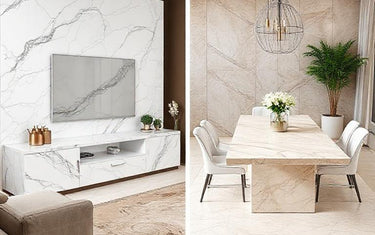
Travertine and marble continue to stand out in modern interior design, especially as natural stone becomes a central element in living rooms, dining spaces, and luxury minimalism. Both stones have a long history in architecture, yet they offer completely different moods. Designers today use them for flooring, countertops, bathroom walls, and increasingly for furniture: travertine coffee tables, marble side tables, console tables, and sculptural pieces.
While both stones can elevate a room, choosing the right one depends on how you want your space to feel. This guide on Travertine vs Marble covers appearance, durability, care, cost, and current design trends so you can decide which one aligns with your aesthetic.
What is Travertine?
Travertine is a type of limestone formed around mineral springs. Its surface shows natural pores and soft, earthy movement. These characteristics make it ideal for warm, grounded interiors. The stone has become one of the most popular choices in 2024–2025 for organic, modern, Mediterranean-inspired, and spa-like spaces.
Common Travertine Colors
Travertine is available in the following colors.
-
Beige
-
Ivory
-
Cream
-
Walnut
-
Light gold
-
Warm gray
Its subtle variation makes it perfect for people who prefer calm, neutral spaces.
What is Marble?
Marble is a metamorphic stone created under high pressure, resulting in its dense structure and distinctive veining. Designers often use marble for dramatic, polished surfaces that draw attention.
Popular Marble Types in Modern Interiors
-
Carrara (soft white with gray veins)
-
Calacatta (stronger veining and brighter white)
-
Nero Marquina (black with striking white lines)
-
Emperador (brown with web-like patterns)
-
Verde Alpi (deep green marble trending in 2025)
Marble works especially well in contemporary homes and luxury settings.
Appearance and Visual Character
Travertine
Travertine has a naturally textured surface that gives depth without overwhelming the room. The stone’s organic pits and layered appearance add dimension. Many homeowners choose it for calm, minimal interiors where texture matters more than shine.
Travertine creates a soft backdrop ideal for:
-
Earthy color palettes
-
Linen and natural wood furniture
-
Warm lighting
-
Mediterranean décor
Marble
Marble offers a completely different presence. Its veining creates movement, contrast, and visual drama. Polished marble reflects light and makes a room feel open and defined.
Marble fits spaces that prefer:
-
Clean lines
-
Monochrome palettes
-
Contemporary or classic luxury
-
A crisp, refined look
Current Design Trends
In 2024–2025, interior designers are using natural stone furniture more frequently, especially in small but impactful ways.
Travertine Coffee Tables
Travertine coffee tables have become extremely popular due to their warm, neutral tones and textured surface. They work well with curved sofas, boucle chairs, soft lighting, and large neutral rugs.
Why Travertine Coffee Tables Are Trending?
Here are the reasons people love travertine coffee tables:
-
Their weight anchors the room.
-
The stone pairs well with natural fabrics.
-
They bring earthy softness to clean spaces.
-
They feel warm even in minimalist settings.
Round travertine tables and chunky rectangular blocks are particularly popular.
Marble Coffee Tables
Marble coffee tables continue to shine in modern homes, especially in black, white, or green variations. The veining instantly turns the table into a focal point.
Why Marble Tables Remain in Demand?
-
They add visual depth without needing bright colors.
-
They match metal accents like brass, black steel, or chrome.
-
Their reflective surface brightens the space.
-
Designers use them as contrast pieces in neutral rooms.
Both travertine and marble pair beautifully with soft seating, but each creates a very different atmosphere.
Durability and Wear Over Time
Travertine
Travertine is durable but slightly more porous. It can handle foot traffic and daily wear but needs sealing to prevent stains. The porous surface actually helps hide small scratches or chips.
Travertine is best for warm climates, patios, bathrooms, rustic interiors, and areas where natural texture is appreciated.
Marble
Marble is dense and long-lasting but sensitive to acidic liquids (wine, citrus, vinegar). It also needs sealing, but is more prone to visible etching. Still, when maintained correctly, marble can last for generations.
It is best for formal areas, entryways, tables, and kitchens with careful maintenance habits.
Maintenance Needs
Travertine
-
Requires regular sealing.
-
Clean with mild, non-acidic products.
-
Textured finishes hide dirt well.
-
Repairs are usually simple because small chips blend into the natural patterns.
Travertine is relatively easy to manage as long as it is sealed and cleaned gently.
Marble
-
Needs frequent sealing in busy areas.
-
Acidic cleaners must be avoided.
-
Polished surfaces show water spots and scratches more easily.
-
Careful cleaning routines help keep the surface smooth.
Marble needs a bit more attention, especially in kitchens and high-use floors.
Cost Comparison
Pricing depends on grade, finish, and thickness, but these are general guidelines:
-
Travertine is usually more budget-friendly.
-
Marble ranges higher, especially rare types with dramatic veining.
For large flooring projects, travertine is more economical. For statement furniture or accent walls, marble is often worth the higher price.
Which One Suits Your Aesthetic?
Choose travertine if you prefer:
-
Warm, natural tones
-
Textured surfaces
-
Organic modern style
-
Mediterranean or rustic vibes
-
A relaxed, earthy atmosphere
-
Furniture with softness and visual calm
Choose marble if you prefer:
-
Clean lines
-
Polished surfaces
-
Bold veining
-
Modern or classic interiors
-
A strong focal point
-
Sleek, expressive furniture pieces
Travertine gives comfort and warmth. Marble gives structure and intensity. Both are beautiful; you just need to decide what mood you want your space to express.
Frequently Asked Questions (FAQs)
Q1. Is travertine good for high-traffic areas?
Ans. Yes. Travertine handles foot traffic well when sealed properly. Its textured surface hides small marks, making it practical for hallways, living rooms, and outdoor spaces.
Q2. Does marble stain easily?
Ans. Marble can stain if exposed to acidic liquids or strong cleaners. Regular sealing and quick clean-ups help maintain its appearance.
Q3. Which stone is better for coffee tables?
Ans. Travertine coffee tables work well for warm, organic interiors. Marble tables are ideal for homes aiming for strong visual contrast or a polished finish. Both options are durable when cared for correctly.
Q4. Can travertine be used outdoors?
Ans. Yes. Travertine performs well outdoors, especially in warm climates. It remains cool to the touch and handles weather changes when sealed.
Q5. Which stone increases home value more?
Ans. Both can add value. Travertine enhances spaces through natural texture, while marble adds strong visual definition. The best choice depends on the overall design of the home.
Conclusion
Choosing between travertine and marble depends on your home's design, maintenance level, and desired atmosphere. Warm, serene tones and a gentle texture make travertine ideal for natural homes. For environments that value comfort and subtle detail, its muted colors and organic surface are excellent. Marble has sharp lines, high visual contrast, and a polished finish that jumps out. Its veining gives any room flair and structure.
Both stones have long-standing design significance and may transform a place differently. Travertine goes well with Mediterranean accents, organic modern design, and warm minimalism. Marble works in modern, classic, and dramatic settings. Choosing a coffee table, flooring, dining table, or accent wall depends on the room's mood. Choosing a stone that matches your style is easy when you understand its appearance, care, and durability.