
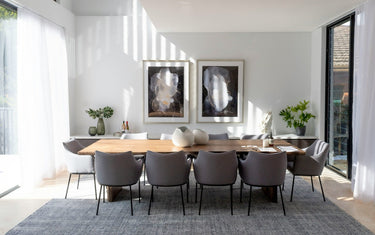
Buying luxury furniture is exciting, but it can also be a little overwhelming. There are beautiful pieces everywhere, and when you're making a serious investment, it's not always easy to know which ones are actually worth it.
The right choice depends on more than how a piece looks. You need to think about the material, how well it's made, whether it suits your space and lifestyle, and how it will hold up in the UAE climate. Even the size and layout of your home can change what works for you.
This luxury furniture buying guide brings all of that together, from choosing the right furniture and materials to checking quality, planning your space, comparing custom and ready-made options, and avoiding common mistakes. By the time you reach the end, you'll have a much clearer idea of what to look for before making your investment.

Why Buying Furniture in the UAE Is Different?
At first glance, buying furniture in the UAE may seem no different from anywhere else. But once you consider the intense heat, humidity, and constant air conditioning, it becomes clear that not every piece is built for life here.
-
Extreme Temperature Shifts
Furniture in the UAE is constantly exposed to extreme temperature shifts. Outside, the desert air is highly humid and intensely hot. Step inside and you are instantly hit by the cold, dry air of air conditioning. This thermal contrast can quickly destroy poorly finished furniture. And if you are not careful with your finishes and materials, your hundreds of dirham investments on furniture may not even last a season.
For instance, if you invest in wood furniture that is not properly seasoned, the arid climate will make it lose its moisture quickly. This will lead to visible cracks on the wood grain and popping against the joinery.
The same goes for leather furnishings. No doubt it looks luxurious, but it is actually an impractical material for your UAE contemporary homes. Leather has a tendency to become sticky on the hottest summer days. In colder months, it can feel extremely uncomfortable and freezing against the skin.
-
The Elevator Fit
Other than the material, another thing that makes furniture buying in the UAE different from the rest of the world is "The Fit". In other countries, you only have to worry if your statement piece fits through the main door. While in the UAE, you have to consider the service elevators or corridors of high-rise buildings. Understanding these local challenges can help you make a long-term investment that lasts for years instead of seasons.
-
Humidity
The desert isn't always as dry as people imagine. If you live in Dubai, Abu Dhabi, or Sharjah, you've probably noticed how humid it can get in summer. That moisture slowly works its way into furniture. It causes wood to swell, veneers to lift, and untreated metal to corrode over time.
-
Dust
If you've lived in the UAE for any length of time, you already know that fine desert dust is part of everyday life. No matter how often you clean, it always finds its way back. That's why it is best to choose furniture with durable finishes that can handle frequent cleaning without losing their beauty.
-
Coastal Conditions
If you're furnishing a home near the beach, pay close attention to the materials you choose. Salt-laden air is much harsher than most people realize. Over time, it can leave its mark on metal and untreated surfaces. Choosing well-finished, high-quality materials can make all the difference in how your furniture ages.
Understanding Different Types Of Furniture
Many people start shopping for furniture by looking at designs they like. While there's nothing wrong with that, we suggest taking a step back first. Think about how you actually use each room. A beautiful piece won't feel like a good investment if it doesn't fit your daily routine or the space it's going into.
Every room asks for something different. The living room is meant for gathering. The dining room brings people together. Similarly, the bedroom should help you relax after a tiring day. Once you know what each space needs, choosing the right furniture becomes much more straightforward.
-
Living Room Furniture
The living room is one of the most-used spaces in any home. Here, every piece should have a purpose. If you are to buy hand-crafted furniture, think beyond appearance. Focus on comfort, practicality, and proportion as well. After all, you'll spend far more time using these pieces than simply looking at them. Choosing furniture that works together creates a living room that feels welcoming and easy to live in.

-
Sofas
A sofa is one of those purchases you'll live with every single day. So it's worth slowing down before making a decision. While it's easy to be drawn to the shape or fabric, comfort is what you'll remember months later. Pay attention to the seat depth, back support, and upholstery. A sofa that suits the way you relax will always outlast one chosen simply because it looked good in the showroom.
-
Coffee Tables
A coffee table should feel like it belongs in the room, not like it was squeezed into the last empty spot. So pay close attention to its size and shape. Avoid opting for a large table as it can overwhelm a compact living room. Similarly, one that's too small often feels disconnected from the seating. Finding the right balance makes the whole space feel more considered.
-
TV Units
Your TV unit shouldn't compete for attention. Instead, it should quietly bring order to the room. While buying one, consider your room layout. Look for designs that offer enough storage for everyday essentials while keeping cables and electronics neatly out of sight.
The cleaner the setup, the more the room feels calm and inviting.
-
Side Tables
Most people don't think much about side tables until they realise they're constantly reaching for somewhere to put a cup of coffee. That's usually when their importance becomes obvious. Rather than buying them as part of a matching set, focus on practicality first. The height should sit comfortably beside your sofa. And there should be enough surface space for the things you actually use every day.
-
Console Tables
A console table is an easy way to make a room feel more complete. Look for a design that complements the surrounding furniture. Don't forget to leave enough space to move around comfortably.
-
Dining Room Furniture
The dining room is one of those spaces that's used differently in every home. For some, it's where the family gathers every evening. For others, it only comes to life when friends and relatives visit. That's why there's no one-size-fits-all approach to choosing dining furniture in the UAE.

Before making a decision, we suggest thinking about how often you'll use the space. Consider how many people you usually host and whether you need room to grow when guests come over.
-
Dining Tables
For dining tables, people usually fall in love with the stone first. We get it. A beautifully veined marble table has a way of drawing you in. But after that first impression, the conversation shifts to something more practical.
-
How much room do you have?
-
How many people will sit here on an ordinary day?
-
Will the table still feel comfortable once the chairs are pulled out?
Those are the questions that matter long after the excitement of choosing a finish has passed.
Must Read these Articles about Dining Tables:
Dining Tables Types & Styles
Dining Tables Size Guide
-
Dining Chairs
A dining chair doesn't need to be oversized to be comfortable. In fact, it's often the opposite. A chair with the right support and proportions is far more inviting than a luxurious-looking one.
Note: If you enjoy lingering over dinner or hosting guests, it's worth sitting in a few different designs before making your decision.
-
Buffets
A buffet is worth considering if your dining room doesn't have enough built-in storage. It gives everyday items like dinnerware and table linen a permanent home, while keeping the dining table free from clutter.
Before buying a buffet , we suggest checking the internal layout rather than just the exterior design. Opt for adjustable shelves and drawers as they are more useful than one large open compartment.
-
Sideboards
A sideboard brings a quiet sense of order to a dining room. It gives you somewhere to serve food when guests are over and also keeps everyday clutter out of sight. We'd only suggest one thing: resist the temptation to buy the biggest one that fits the wall. A little breathing room around a piece always looks better than filling every inch.
-
Bedroom Furniture
The bedroom is probably the easiest room to get wrong. It's easy to fall for a beautiful bed or an elegant wardrobe. But homes have a funny way of revealing what really matters. A bedroom should have:
-
Enough space to move around comfortably.
-
A bedside table that's actually within reach.
-
Storage that works with your routine instead of against it.
Those are the details you'll appreciate long after you've stopped admiring the furniture.

-
Beds
It's easy to assume a bigger bed is always better. Sometimes it is. Sometimes it simply leaves you squeezing past the corners every morning. So it's better to picture the room once all the furnishings are in place. Will you still have enough room to move around comfortably once the bed and side tables are in place?
Then there's the frame itself. Don't be afraid to give it a gentle push or sit on the edge for a moment. A well-made bed should feel solid and steady. The last thing you want is a bed that starts creaking every time you turn over six months later.
-
Night Stand
It's tempting to pick a nightstand simply because it matches the bed, but that's rarely what makes it the right choice. Start with your routine instead. If all you need is somewhere to leave your phone and a glass of water, a compact design will do the job beautifully. Otherwise, go for a storage-sufficient option with drawers.
-
Dresser
A dresser is ideal for the things you reach for every day. But before choosing one, think about what you'll actually be storing. If you own bulkier clothes, deep drawers are a great fit. While shallower drawers make it easier to keep smaller items organized.
-
Wardrobes
Once the bed is in place, the wardrobe is usually the next big decision. Rather than choosing one based on size alone, think about how you use it every day. A layout that matches your routine will always feel more practical than extra storage options.
-
Entryway Furniture
The entryway doesn't need much furniture to work well. A slim console, a bench, or even a single storage cabinet is usually enough. Also, leave a little breathing room. It'll make the space feel larger. Plus, you'll appreciate it every time you walk through the door with shopping bags in both hands.

-
Home Office Furniture
Not every home office looks the same, and that's the point. Some people only need a quiet corner for a laptop. Others need space for meetings, paperwork, or multiple screens. Before buying anything, think about how you'll use the room. Once you know that, choosing the right desk, chair, and storage becomes much easier.

-
Outdoor Furniture
Outdoor furniture has a tougher life in the UAE than most people realise. The sun here is unforgiving. By the middle of summer, it would have already tested every material you've chosen. That's why we'd spend less time comparing colours and more time asking what it's made from. The right material will still look good long after the novelty of a new patio set has worn off.
Understanding Furniture Materials
Most furniture shopping starts with a simple question: "Do I like how it looks?" Fair enough. That's usually what catches your eye first.
But that changes once the furniture comes home. Suddenly, it's not just about how it looks. It's about how easily scratches show up. Whether stains wipe away or soak in. How much maintenance you'll be doing a year from now. Even how well the piece handles the UAE climate, humidity, and constant air conditioning.
That's why understanding furniture materials matters. It helps you look beyond the design and choose pieces that truly suit your home, villa, or apartment.
Marble Furniture
Marble tends to divide opinion. Some people won't consider anything else. Others avoid it because they've heard it's too delicate. In reality, neither is completely true.
What makes marble different is that it's a natural stone. Every slab has its own veining, colour shifts, and little imperfections. That's exactly why two marble tables are never identical and can never be recreated.

Now, it's also worth noticing that marble isn’t a low-maintenance material. If you're the kind of person who worries about every tiny mark, this may not suit you. But if you appreciate natural materials that develop character over time, marble is one of those choices people rarely regret.
Benefits
-
Every slab is naturally unique, so no two pieces are exactly alike.
-
Naturally cool to the touch, making it comfortable in the UAE's warm climates.
-
Timeless appearance that does not go out of style.
-
Strong, durable surface.
-
Adds long-term value to luxury interiors.
Drawbacks
-
Porous by nature, so spills should be cleaned promptly.
-
Can scratch or etch if exposed to abrasive cleaners or acidic substances.
-
Considerably heavier than most furniture materials, making it difficult to move.
Maintenance
-
Wipe spills as soon as possible, especially coffee, tea, wine, or citrus.
-
Clean with a soft cloth and a pH-neutral stone cleaner.
-
Avoid harsh chemicals and abrasive pads.
-
Reseal periodically to help protect the surface from stains.
Best Uses
-
Dining tables
-
Coffee tables
-
Console tables
-
Side tables
-
TV units
-
Statement accent furniture
Best Marble Types
-
Calacatta
-
Statuario
-
Carrara
-
Arabescato
-
Nero Marquina
-
Emperador
-
Volakas
-
Panda White
-
Rosalia Pink Marble
-
Botticino Marble
-
White Onyx Marble
-
Venus Grey
-
Creama Uno Marble
Travertine Furniture
Travertine has become a popular choice for people who want natural stone without making it the centre of attention. It doesn't dominate a room. Instead, it quietly brings warmth and texture wherever used. That's one reason you'll often see it paired with oak, walnut, linen, and other natural materials.
Benefits
-
Warm, natural tones. Suitable for both contemporary and minimalist interiors.
-
Every slab has its own texture and pattern, making each piece unique.
-
Stays naturally cool, making it comfortable in warmer climates.
-
Pairs beautifully with wood, glass, and metal finishes.
Drawbacks
-
Naturally porous, so it should be sealed to help prevent stains.
-
The textured surface may collect dust more easily than polished stone.
-
Prone to chips if subjected to heavy impact.
Maintenance
-
Clean regularly with a soft cloth and a pH-neutral stone cleaner.
-
Wipe up spills promptly to reduce the risk of staining.
-
Reseal the surface periodically to maintain its protection.
-
Avoid acidic or abrasive cleaning products.
Best Uses
-
Coffee tables
-
Console tables
-
Dining tables
-
Side tables
-
Accent furniture
Best Travertine Types
-
Classic Travertine
-
Silver Travertine
-
Walnut Travertine
-
Noce Travertine
-
Ivory Travertine
-
Titanium Travertine
Granite Furniture
If your furniture is going to see a lot of everyday life, granite is worth a closer look. It is a fairly low-maintenance material that requires very little care. Moreover, it still gives you the look of natural stone, but fits more comfortably into busy life. Granite furniture pieces are ideal for families with kids and pets.
Benefits
-
Highly resistant to scratches and everyday wear.
-
Handles heat better than most natural stone surfaces.
-
Each slab has unique natural patterns and mineral variations.
-
A practical choice for busy households.
-
Long-lasting with minimal upkeep.
Drawbacks
-
Heavier than most furniture materials.
-
Limited repair options if the stone chips from a heavy impact.
-
Usually offers a bolder, more speckled appearance. This may not suit every interior style.
Maintenance
-
Wipe with a soft cloth and a mild stone cleaner.
-
Granite is naturally more stain-resistant than many other stones. But it's good to wipe the spills promptly.
-
Reseal occasionally to help maintain its protective barrier.
Best Uses
-
Dining tables
-
Coffee tables
-
Outdoor tables
-
Kitchen islands
-
Console tables
Best Granite Types
-
Absolute Black
-
Black Galaxy
-
Viscount White
-
Steel Grey
-
Colonial White
-
Alaska White
-
Blue Pearl
-
Tan Brown
Quartz Furniture
Quartz has changed the way many people think about stone furniture. Years ago, choosing stone often meant accepting a little extra maintenance. Quartz offers a different experience. It keeps the crisp, refined look people love, but it's designed for everyday living.
Alt Text: Round quartz coffee table with a smooth white stone top in a UAE contemporary living room.
Benefits
-
Non-porous surface that resists everyday stains.
-
Consistent colour and pattern across multiple pieces.
-
Doesn't require regular sealing.
-
Easy to clean and maintain.
-
Available in a wide range of colours and finishes.
Drawbacks
-
Doesn't have the one-of-a-kind character of natural stone.
-
Prolonged exposure to direct sunlight may cause fading over time.
-
Very high heat can damage the resin used in engineered quartz.
Maintenance
-
Clean with a soft cloth and mild soap.
-
Wipe spills as they happen to keep the surface looking its best.
-
Use trivets for hot cookware.
-
Avoid abrasive cleaners and harsh chemicals.
Best Uses
-
Dining tables
-
Coffee tables
-
Side tables
-
Home office desks
-
Console tables
Best Quartz Types
-
Calacatta Quartz
-
Carrara Quartz
-
Statuario Quartz
-
Pure White Quartz
-
Concrete Grey Quartz
-
Black Quartz
Sintered Stone Furniture
Sintered stone is one of those materials people rarely ask for by name. More often, they notice a table they like and only then discover what it's made of. That usually leads to the same question: "Does it need much maintenance?" Not really. That's one of the reasons it's become so popular. It handles everyday use well. Plus, it doesn't need any sealing. A sintered stone furniture piece works just as comfortably in a dining room as it does on a covered patio.
Benefits
-
Highly resistant to scratches, stains, and everyday wear.
-
Withstands heat without easily marking the surface.
-
Non-porous, so it doesn't require sealing.
-
UV-resistant, making it suitable for both indoor and outdoor use.
-
Available in finishes that resemble marble, concrete, and other natural stones.
Drawbacks
-
Chipped edges can be difficult to repair.
-
The thin profile doesn't suit every furniture style.
-
Usually costs more than many engineered surfaces.
Maintenance
-
Wipe with a soft cloth and mild cleaner.
-
Clean spills as they happen.
-
Avoid abrasive pads on polished finishes.
-
No sealing is required.
Best Uses
-
Dining tables
-
Coffee tables
-
Outdoor dining tables
-
Console tables
-
Side tables
Best Sintered Stone Types
-
Statuario
-
Calacatta
-
Pietra Grey
-
Noir Laurent
-
Travertino
-
Cemento
Solid Wood Furniture
Solid wood furniture is a long-term investment. It is usually bought with the hope that it'll last for a long time. That's why the wood itself deserves as much attention as the design.
Alt Text: Modern solid wood platform bed with a natural oak finish and clean-lined headboard.
Though it's easy to fall for a beautiful finish in a showroom, oak, walnut, ash, teak, and acacia all bring something different to the table. Some cope better with busy homes. Others are admired for the way they look as the years go by. Once you know those differences, narrowing down your options for your luxury interior becomes much easier.
-
Oak
If you're stuck between different wood types, oak is usually the safest place to start. It has a balanced look that works with almost any interior. It's also durable enough for furniture that's used every day.
-
Walnut
Walnut has been a favourite for furniture makers for generations. This wood has a natural depth of colour that doesn't need much dressing up. Its rich wood grains make every furniture item feel different.
-
Ash
If you like light wood but find oak a little too familiar, have a look at ash. It has a cleaner grain and a softer appearance. It's also surprisingly tough and does not date as quickly as some may believe. If you enjoy changing your interior design décor every few years, ash is one of those woods that usually keeps up.
-
Teak
Teak is a natural solid wood that is rich in oils. It copes well with moisture and changing weather. That's why it's just as common outdoors as it is inside the home
-
Acacia
One thing to expect with acacia is variation. This solid wood does not try to look perfect. The grain isn't always even, and the colours aren't either. If you're hoping for a perfectly consistent finish, another wood might suit you better. But if those natural differences are exactly what you like, acacia rarely disappoints.
How To Evaluate Furniture Quality?
This is probably the question every buyer has in mind. “How to evaluate furniture quality before making it a part of my space?” Welp, most people judge furniture by how it looks. That's understandable. But if you want something that still feels solid years from now, you need to look at what's underneath the surface. A few simple checks can tell you a lot about the quality of a piece.
-
Frame Construction
If the frame isn't built properly, the rest of the furniture won't make up for it. Sofas, beds, and chairs should have a solid hardwood. You can also opt for a well-engineered metal frame that feels rigid when moved. Remember, a slight wobble in the showroom rarely gets better once it's at home.
-
Joinery
Most people never think about joinery until a chair starts wobbling or a drawer begins to pull apart. That's exactly why it matters. Well-made furniture relies on strong joints, not just glue and screws.
When buying, if you come across terms like mortise and tenon or dovetail, they're generally signs that the piece has been built with durability in mind. Finger joints are different again. They're used to create longer, stable sections of timber and are common in quality furniture.
You don't have to memorise the terminology. Just knowing what these joints are designed to do makes it easier to judge what's behind the price tag.
Alt Text: Craftsman cutting hardwood during the furniture joinery process.
-
Stone Thickness
A thicker stone top often feels more substantial, but don't judge by thickness alone. Lift your eyes and check what's supporting it underneath. A well-supported 20 mm top can outlast a poorly built table with a much thicker slab.
-
Surface Finish
Run your hand across the surface of the furniture. It should feel even all the way through, especially around edges and corners. Rough patches, uneven colour, or tiny bubbles in the finish are signs of rushed workmanship.
-
Hardware
Handles and fittings don't get much attention until something starts loosening. Give them a try. They should feel secure in your hand, not hollow or flimsy. Small details like these often reflect the overall standard of the furniture.
-
Drawer Slides
Open the drawer all the way, then close it again. It should move smoothly without catching or leaning to one side.
-
Hinges
Cabinet doors should open easily and line up properly when closed. Gaps that look uneven or doors that rub against the frame are usually signs the cabinet hasn't been assembled particularly well.
-
Weight Capacity
Not every dining chair or shelf is designed for the same level of use. If the furniture is going to be used every day, don't hesitate to ask about its weight capacity. This matters most for dining chairs, shelves, beds, and bar stools. A piece that's built for the way you live is far less likely to disappoint later.
-
Warranty
Before buying, ask one simple question: "If something goes wrong, what happens next?" The answer often matters more than the length of the warranty itself. Look for clear coverage, an easy claims process, and realistic support after the sale.
How To Choose Furniture by Property Type?
If you’ve ever been to a furniture showroom, you’d likely agree. A furniture showroom can make almost anything look like the right choice. Nevertheless, living with the same furniture is a different story. The size of your home, the layout, even something as simple as a staircase or lift, can influence what actually works. Keeping those in mind from the start can save you from buying pieces that look right in the showroom but don't work as well at home.
-
Studio Apartment
Buying luxury furniture for a studio apartment is far more complicated than most buyers understand. The space is compact here, and every piece you add needs to be multi-functional. For instance, a sofa may work as a sitting space during the day and a sleep solution at night.
Size is just as important. Furniture that looks perfect in a showroom can feel a little too oversized once it's inside a studio. Also, think about how a piece fits the layout. If a piece of furniture does not leave enough room for you to move comfortably, it isn't the one for your space.
-
Two Bedroom Apartments
Two-bedroom apartments provide more freedom while buying furniture. But balance is still important. The key here is to avoid buying complete sets and focus only on what you actually intend to use. Start by deciding how the second bedroom will be used, then choose furniture that supports that purpose. It will help you create a space that feels open and put together.
-
One Bedroom Apartments
One-bedroom apartments are often the easiest homes to overfurnish. There's enough space to fit more, but not always enough space to make it feel comfortable. So before buying another chair, side table, or cabinet, ask yourself if it has a real purpose. Only invest if it is actually needed.
-
Penthouse
A penthouse gives you space to think beyond individual pieces. But large spaces can be surprisingly difficult to furnish. Furniture that's too small often looks lost. On the other hand, oversized pieces can make a room feel heavy.
We suggest choosing furniture pieces that suit the overall layout of your room. Avoid filling every corner just because you have space. Leaving enough room for the architecture to stand out creates a sense of balance throughout the place.
-
Townhouse
One of the nicest things about a townhouse is that it gives you room to slow down. You don't have to furnish every corner from day one. (Yay!) Start with the spaces you use the most. Then let the rest of the home come together over time. Keep a common design language for your furniture throughout the home to make it look more cohesive.
Furniture Dimensions & Space Planning
Most furniture returns happen for one simple reason: the piece fits the room, but it doesn't fit the way you live. A dining chair that can't be pulled out comfortably. A wardrobe door that hits the bed. A sofa that blocks the easiest path across the room. Spending ten minutes with a tape measure before you buy is usually time well spent.
-
Measuring Rooms
If you browse enough Reddit threads about furniture regrets, one theme keeps coming back: "I thought it would fit." In most cases, the furniture did fit. The room just stopped working the way people expected. Remember, A room almost always feels bigger when it's empty.
Before buying, measure the space. Then map out the furniture footprint on the floor with masking tape if you can. It's a simple trick, but it quickly shows whether the room will still feel comfortable once everything is in place.
-
Measuring Doorways
Many UAE homes, especially apartments, have more than one doorway to think about. The furniture has to make it through the apartment entrance, hallways, and bedroom doors before it reaches its final place. Measuring each opening takes only a few minutes and can save a very frustrating delivery day
-
Elevator Dimensions
If you're furnishing an apartment in Dubai, Abu Dhabi, or any other UAE high-rise, don't overlook the lift. Modern buildings often have spacious elevators. But that's not always the case.
Before ordering a large sofa, dining table, or king-size bed, check the lift dimensions with your building management. It's much easier than finding out on delivery day that the furniture you ordered won't make it upstairs.
-
Walking Space
One of the easiest ways to make a room feel smaller is to interrupt the natural path through it. So it is best to leave clear paths between furniture, especially in areas you walk through every day.
Imagine your everyday routine. You'll be carrying shopping bags, walking past with a cup of coffee, or helping children around the house. Those little journeys deserve just as much space as the furniture itself.
-
Dining Clearance
Dining chairs need more space than most people expect. They have to slide out, and people have to sit comfortably. If every meal means asking someone to move their chair, the table is probably too large for the space. It's worth planning for all three before choosing the table size.
-
Coffee Table Clearance
A coffee table has an annoying habit of ending up in exactly the wrong place. Too close, and you'll notice it every time you stand up. Too far, and you'll keep leaning forward to reach it. Getting that distance right makes the whole seating area feel more comfortable
-
TV Viewing Distance
Your sofa and TV should be planned together. It's easy to choose a TV first and work everything else around it, but that often leaves the seating either too close or too far away. Before buying a TV unit or arranging your living room, decide where the sofa will sit. From there, you can choose a screen size that feels comfortable to watch. Industry recommendations from THX and SMPTE both suggest 4K TV is most comfortable when viewed from about 1 to 1.5 times the screen's diagonal. That means a 55-inch TV works well from roughly 1.4–2.1 metres, while a 65-inch TV is best viewed from around 1.7–2.5 metres
Marble vs Wood vs Stone Furniture
By now, you've seen what each furniture material brings to the table. This side-by-side comparison of stone vs marble vs wood furniture makes it easier to weigh the differences.
|
Feature |
Solid Wood |
Marble |
Engineered Stone (Quartz & Sintered Stone) |
|
Typical Price (UAE) |
AED 2,000–10,000+ |
AED 3,000–15,000+ |
AED 2,500–12,000+ |
|
Durability |
High |
High but prone to chipping |
Very High |
|
Luxury Appeal |
Warm, timeless luxury |
High-end, statement luxury |
Modern luxury with a clean, contemporary look |
|
Maintenance |
Moderate. Occasional polishing and protection from moisture. |
Moderate to High. Needs sealing and quick spill clean-up to reduce staining. |
Low. Non-porous and easy to maintain with minimal upkeep. |
|
Average Lifespan |
20–50+ years |
50+ years |
30–50+ years |
|
Scratch Resistance |
Moderate |
Moderate |
Excellent |
|
Heat Resistance |
Good |
Excellent |
Very Good (Quartz) / Excellent (Sintered Stone) |
|
Moisture Resistance |
Good with a quality finish |
Excellent when properly sealed |
Excellent |
|
Suitability for UAE Climate |
Excellent in air-conditioned interiors. Avoid prolonged moisture and direct sun. |
Excellent. Performs well in the UAE's heat and naturally stays cool. |
Excellent. Designed to handle heat, humidity, and everyday wear with very little maintenance. |
|
Best Applications |
Beds, wardrobes, dining tables, TV units, office furniture |
Dining tables, coffee tables, console tables, luxury accent pieces |
Dining tables, coffee tables, kitchen furniture, family homes, high-traffic areas |
|
Best For |
Buyers who value warmth, craftsmanship, and natural character |
Buyers looking for a luxurious focal point |
Busy households that want premium looks with minimal maintenance. |
Expert Tip
For most UAE homes, there isn't one material that's "best" for everything. Many interior designers mix them instead.
Custom Furniture vs Ready-Made Furniture
Unlike many countries where you simply buy what's on display, the UAE furniture market gives you far more choice. Many retailers offer custom dimensions, materials, and finishes alongside ready-made collections. That's one of the biggest advantages of shopping here. But it also raises an important question: should you customise, or buy ready-made?
Let’s find out.
|
Feature |
Custom Furniture |
Ready-Made Furniture |
|
Pros |
Made to your exact dimensions, choice of materials, colours, finishes, and design. Ideal for making full use of available space. |
Available immediately. Easier to compare in person. Usually costs less upfront. |
|
Cons |
Longer production time and generally a higher price. Changes after production begins may not be possible. |
Limited sizes, colours, and materials. You may have to compromise on fit or design. |
|
Cost |
Higher initial investment, especially with premium materials. |
Usually more affordable with a wider range of price points. |
|
Lead Time |
Typically 2–8 weeks, depending on the design and materials. Some UAE manufacturers like Art Dei Marmi offer much shorter lead times. |
Often available immediately or delivered within a few days if in stock. |
|
Material Choice |
Full control over wood species, stone, fabric, leather, metal finishes, and hardware. |
Limited to the options offered by the manufacturer. |
|
Personalization |
High. Dimensions, storage, finishes, and details can all be tailored to your home. |
Low. Personalization is usually limited to colour or upholstery options. |
|
Best Use Cases |
Villas, penthouses, awkward room layouts, luxury interiors, or homeowners looking for a one-of-a-kind piece. |
Rental properties, quick renovations, first homes, guest rooms, or anyone working within a tighter budget or timeline. |
Common Furniture Buying Mistakes
Most furniture mistakes don't happen because people make bad decisions. They happen because there are things you only think about after the furniture has been delivered. A piece can look perfect in the showroom and still turn out to be the wrong choice once you start living with it.
Here are some of the most common oversights and how to avoid them.
-
Not Setting a Realistic Budget
Setting a realistic budget is probably the most overlooked aspect of the entire furniture buying process. Yet it is the most crucial one. A clear budget helps you stay focused on essentials. It also narrows down your options to your financial capabilities so you don't end up spending more.
Note: While creating a budget, bear in mind that quality craftsmanship often holds its value. What may seem like an expense now can be a long-term investment in your comfort.
-
Buying Based on Appearance Alone
It's natural to notice the design first. That's what catches your eye. But before deciding, look past the finish and ask what the furniture is actually made of. Learn how it's built, and whether it suits the way you'll use it every day.
-
Ignoring Material Quality
Two tables can look almost identical from the outside and perform very differently over time. Spending a few minutes understanding the material often tells you more about the furniture than the design ever will.
-
Choosing MDF Without Realising It
Not every wood-look cabinet is made from solid timber. MDF has its place, but it behaves differently from solid wood. Knowing what you're buying helps you set the right expectations.
-
Buying Oversized Furniture
Larger furniture isn't always better. If a sofa blocks natural walkways or dominates the room, the space quickly starts to feel smaller than it really is.
-
Forgetting About Maintenance
Every material asks for something different. Marble may need sealing. Solid wood benefits from occasional care. Some engineered surfaces need very little attention at all. It's worth choosing a material that matches the amount of maintenance you're realistically happy to do.
-
Choosing Style Over Function
Furniture should look good, but it also has to suit the way you live. A beautiful dining table that barely leaves room for chairs or a designer sofa that's uncomfortable after twenty minutes won't feel like a good purchase for long.
-
Ignoring the UAE Climate
The UAE has a habit of putting furniture through two seasons in a single day. It's scorching outside, then the air conditioning is running for hours indoors. If a piece is going to sit in that kind of environment, it's worth checking whether the material is actually suited to it.
Luxury Furniture Buying Checklist
Before you say yes to the furniture, make sure you can answer yes to these too.
|
✓ |
Check |
|
☐ |
Have I measured the room and the delivery route? |
|
☐ |
Am I choosing this material for the right reasons, not just because I like how it looks? |
|
☐ |
Does the construction feel solid? |
|
☐ |
Have I checked the finish closely in natural light? |
|
☐ |
Do I understand how to care for this material? |
|
☐ |
Have I read what the warranty actually covers? |
|
☐ |
Does it suit the rest of my home? |
|
☐ |
Am I comfortable with the final price, including delivery and installation? |
Alt Text: Modern living room layout with coordinated sofa, coffee table, accent chair, and storage console.
Frequently Asked Questions
What should I consider before buying furniture in the UAE?
Measure your space first. Then check the material, build quality, delivery access, warranty, and maintenance requirements. It's also worth choosing materials that perform well in the UAE's heat and air-conditioned interiors.
Which furniture material lasts the longest?
Natural stone and solid hardwood are among the longest-lasting furniture materials. With proper care, both can remain in excellent condition for decades.
Is marble furniture suitable for Dubai's climate?
Yes. Marble performs well in Dubai's climate and naturally stays cool. Just keep it sealed and wipe up spills quickly to help prevent stains.
What is the difference between marble and travertine?
Marble has a smoother surface and more dramatic veining. Travertine has a softer, textured appearance with earthy tones. Both are natural stone but create very different looks.
Is solid wood better than engineered wood?
It depends on your needs. Solid wood lasts longer and can be refinished. Engineered wood is more affordable and often more resistant to everyday movement and warping.
Which wood is best for luxury furniture?
Walnut, oak, teak, and ash are all excellent choices. Each offers a different look, but all are known for their strength and durability.
How do I know if furniture is high quality?
Check the frame, joints, hardware, and finish. Drawers and doors should open smoothly, and the furniture should feel solid with no wobbling.
Should I buy custom furniture?
If you're investing in furniture you'll keep for years, custom is usually the better choice. It gives you the freedom to choose exactly how the piece looks, feels, and fits your home.
What is the best dining table material?
There isn't one best option. Marble offers luxury, solid wood adds warmth, and quartz or sintered stone require less maintenance.
How do I maintain marble furniture?
Use a soft cloth and a pH-neutral cleaner. Wipe up spills quickly and reseal the surface when recommended.
How long does luxury furniture last?
Well-made luxury furniture can last 20 to 50 years or more. Quality materials and regular care make the biggest difference.
What is the best furniture style for modern UAE homes?
Modern, contemporary, and minimalist styles remain popular. Many homeowners also combine natural wood and stone for a warmer look.
What should I check before furniture delivery?
Confirm the dimensions, delivery route, elevator access, and installation requirements. Inspect the furniture before accepting the delivery.
How much should I budget for premium furniture?
The budget depends on the room, materials, and level of customization. Focus on quality for the pieces you use every day.
Can luxury furniture increase the value of my home?
It may not increase the property's value directly. However, it can improve presentation and leave a stronger impression on potential buyers.